
Detectors
Minimax and HELIOS: types, successors and replacement
Which Minimax detectors and HELIOS aspirating smoke detectors from year of manufacture 2000 onwards must be replaced, what is still available and which unit replaces older types.
Detector age
How old is the detector – how long has it been in operation?
- Minimax / HELIOS: Type plate on the detector or unit with type and date of manufacture. The commissioning date can be found in the system’s logbook and reports.
- Logbook and reports (decisive): The operating time counts from the commissioning of the detector. The date is recorded in the logbook, in the commissioning or acceptance report or in the last replacement report. This gives the years and months in operation.
- Type plate on the detector: The label (usually on the underside or side of the detector, visible after twisting it out of the base) shows the type, serial number and date of manufacture or a date code (e.g. year/calendar week). If no commissioning date is documented, we take the cautious approach of calculating from the date of manufacture.
- Reading out via the panel: With many addressable loop detectors, detector data such as serial number, date of manufacture, degree of contamination and – depending on the system and software version – operating hours can be retrieved via the panel’s operating unit or programming software. We do this during the survey using your programming file.
This determines the replacement interval under DIN 14675: as a rule 5 years, or 8 years for detectors with contamination compensation and testing in accordance with the manufacturer’s specifications – details under Deadlines & standards. Send us a photo of the type plate and we will determine the age for you.
Minimax
Which Minimax detector do you have installed?
Minimax fire detection and extinguishing control panels (FMZ 4100, FMZ 5000, Clunid FMZ 6000) work with addressable loop and conventional detectors. The addressable loop detectors of the …95 series (OMX95, OWMX95, WMX95) run on the Apollo XP95 protocol; according to the system approval, Apollo detectors are also permitted on the FMZ 5000. For industry and special areas there are the UniVariodetectors (WMX5000, FMX5000, YMX5000) and the aspirating smoke detectors HELIOS (AMX).
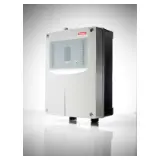
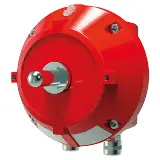
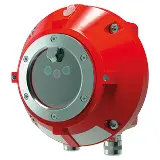
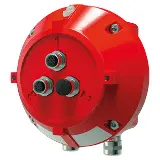
Images: Minimax GmbH. Examples shown.
Loop and conventional
Minimax point detectors (Apollo technology)
The Minimax point detectors are listed in the system approval of the FMZ 5000 together with Apollo and System Sensor detectors. We clarify with Minimax whether a Minimax type is still available or will be replaced by an Apollo detector – you will find Apollo types, successors and bases on the Apollo page.
| Image | Detectors | Type | Available? | Alternative detector | New base? |
|---|---|---|---|---|---|
| – | Optical smoke detector, loop (XP95 protocol) | OMX95 | on request | same type or Apollo detector subject to Minimax approval | on request |
| – | Multi-criteria detector smoke/heat, loop (XP95 protocol) | OWMX95 | on request | same type or Apollo detector subject to Minimax approval | on request |
| – | Heat detector, loop (XP95 protocol) | WMX95 | on request | same type or Apollo detector subject to Minimax approval | on request |
| – | Optical smoke detector, conventional technology | OMX1001C / OMX1111C | on request | same type | on request |
| – | Optical smoke detector for hazardous (Ex) areas, conventional technology | OMX1001C Ex | on request | same type | on request |
| – | Duct smoke detector | BMX1001 / BMX1001-AP | on request | same type | – |
Types according to VKF information no. 22831 on the FMZ 5000 (valid until 31.12.2021). All detectors listed there are tested to EN 54; we confirm the current delivery status with the quote.
Industrial detectors
UniVario detectors
UniVario detectors become loop devices via the KMX5000 AP or KMX5000 AP Ex communication modules. The older flame detectors FMX3511 and FMX3501 Ex are being superseded by the FMX5000 series – the assignment is made according to the application (IR or UV).
| Image | Detectors | Type | Available? | Replace with | Note |
|---|---|---|---|---|---|
| Heat detector with stainless steel sensor, fixed-temperature and rate-of-rise evaluation (EN 54-5) | WMX5000 | yes | same type | also single-hole version for ducts |
| High-temperature heat detector with remote sensor up to 850 °C | WMX5000 FS | yes | same type | Alarm temperature adjustable |
| Infrared flame detector, 3 channels (EN 54-10) | FMX5000 IR | yes | same type | – |
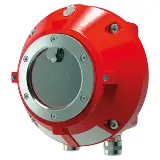 | UV flame detector (EN 54-10) | FMX5000 UV | yes | same type | – |
| Spark and flame detector, modular | YMX5000 | yes | same type | for conveyor and extraction systems |
| Flame detector, older generation | FMX3511 | on request | FMX5000 IR or FMX5000 UV | Check system design |
| Flame detector for hazardous (Ex) areas, older generation | FMX3501 Ex | on request | FMX5000 Ex version | Check system design |
Types according to the Minimax UniVario product page and VKF information no. 22831.
HELIOS
HELIOS aspirating smoke detectors (EN 54-20)
HELIOS is Minimax’s aspirating smoke detection system. The current model is the HELIOS AMX5000 with combined measuring chambers. For older HELIOS units of the AMX4000 and TDS series, we clarify whether replacement detectors are available or whether a switch to the AMX5000 is required – in which case the pipe network must be recalculated in accordance with EN 54-20.
| Image | Unit | Type | Available? | Alternative unit | New pipe network? |
|---|---|---|---|---|---|
| HELIOS aspirating smoke detector, current generation | AMX5000 | yes | same type (measuring chamber in accordance with the manufacturer’s specifications) | no |
| HELIOS aspirating smoke detector for wind turbines | AMX4004 (WEA) | yes | same type | no |
| HELIOS aspirating smoke detector, older series | AMX4000 series | on request | AMX5000 | Recalculation required |
| HELIOS aspirating smoke detector, older series | TDS series | on request | AMX5000 | Recalculation required |
Types according to the Minimax HELIOS product page and VKF information no. 22831. For aspirating smoke detectors, the replacement interval applies to the measuring chamber or sensor system.
Important
Before ordering
- Check the panel: Only detectors listed in the system approval of the respective panel may be operated on Minimax panels. We check this using your detector list and programming file.
- Replacement interval: Smoke and multi-sensor detectors after 5 years at the latest, or after 8 years with automatic contamination compensation and testing in accordance with the manufacturer’s specifications – details under Deadlines & standards.
- Change of detector series: New bases, different detector types or a changed number of detectors may constitute a significant modification – see expert inspection and fire brigade.
- EN 54 tested (as of 19.10.2026): The HELIOS aspirating smoke detectors are certified to EN 54-20, the UniVario flame detectors to EN 54-10 and the WMX5000 to EN 54-5. We have no EN 54 approval on record for the high-temperature heat detector WMX5000 FS (up to 850 °C) or the YMX5000 spark detectors – they are used as special detectors according to the system design. Detectors that are no longer available were approved under the EN 54 or VdS rules in force at the time of their introduction; since 2008, CE marking to EN 54 has been mandatory for new detectors – which is why we only name currently certified types as replacements.
- Installation by a specialist company only: Replacement and repair of detectors in fire alarm systems required under building law are part of maintenance and are reserved for a specialist company certified to DIN 14675 – even if you only buy the detectors from us. Details under Legal situation.
- Order numbers from Minimax are not published by the manufacturer; we will provide them with the quote.
- Image credits and trademarks: Product images © Minimax. The images serve solely to identify the detectors. Brand and product names are the property of their respective owners. Further details in the Legal notice.
Not sure which detector is installed at your site?
Send us your detector list or a photo of the type plate. We will name the suitable replacement and tell you whether new bases are needed.